

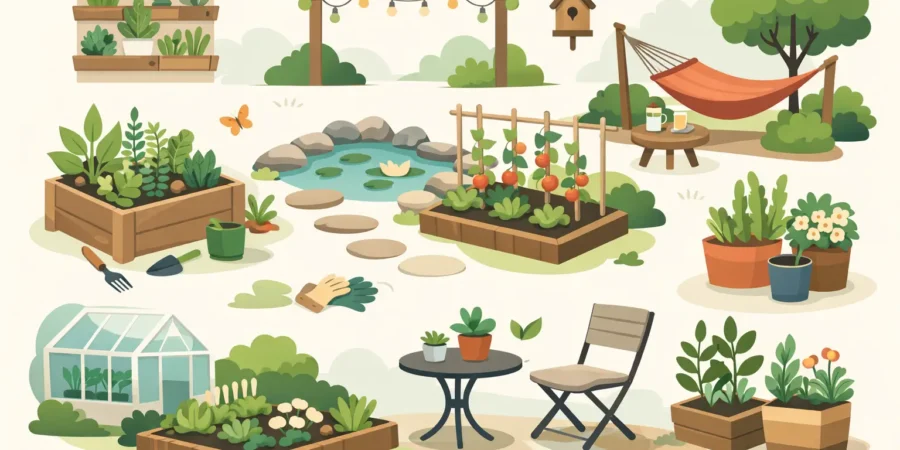
A small garden usually looks easy until you are standing in a store holding too many seed packets, one oversized pot, and a watering can you did not plan to buy. That is why the best small garden ideas for beginners are not about doing more. They are about choosing a setup that fits your space, your schedule, and your confidence level.
If you are starting from scratch, the biggest mistake is treating every small space the same. A sunny balcony, a shaded patio, and a narrow backyard corner all need different choices. The good news is that a compact garden is often easier to manage, cheaper to build, and faster to learn from than a large one.
Why small garden ideas for beginners work better
Beginners often assume a bigger garden gives them more room for mistakes. In practice, a smaller setup is usually the smarter choice. You spend less on containers, soil, and tools. You also notice problems sooner, whether that is dry soil, too much shade, or a plant that has simply outgrown its spot.
A small garden also forces better decisions. Instead of buying random plants and hoping they work together, you are more likely to compare your options and choose plants with similar light and watering needs. That makes the whole garden easier to maintain.
Start with one clear purpose
Before you choose plants, decide what you want the garden to do. This sounds basic, but it saves time and money. Some beginners want fresh herbs near the kitchen. Others want a neat green corner that softens a balcony or entryway. Some want a few easy vegetables and nothing decorative at all.
A garden built for one main purpose usually performs better than a mixed setup with too many competing goals. If you want edible plants, start there. If you want low-maintenance greenery, focus on foliage and sturdy flowering plants. If you want something family-friendly, choose fast growers that make progress easy to see.
Match the garden to your time, not just your taste
This is where many beginner plans fall apart. Tomatoes may look appealing, but they need more attention than herbs like mint or basil. Flowering plants can brighten a small space, but some require regular trimming to stay tidy. If your weekly schedule is already packed, it makes more sense to build around forgiving plants than ambitious ones.
1. Use containers before digging anything
For most beginners, containers are the easiest entry point. They give you control over soil, drainage, and placement. If one area gets too much heat or not enough sun, you can move the pot instead of starting over.
Containers also work well in apartments, patios, rooftops, and small courtyards. The trade-off is that pots dry out faster than in-ground beds, especially in hot weather. That means container gardening is simple, but not always low-water. Pick larger pots when possible because they hold moisture better and give roots more room.
2. Build around herbs first
Herbs are one of the safest beginner choices because many grow well in small spaces and offer quick payoff. Basil, mint, parsley, chives, and rosemary are popular starting points. You can grow them in separate pots or group them by similar needs.
The main caution is not to crowd them. Mint, for example, spreads aggressively and is usually better in its own container. Rosemary likes drier conditions than some softer herbs. Keeping herbs organized by watering style helps prevent one healthy plant from becoming the reason another struggles.
3. Choose a small color palette
A compact garden can look messy fast when every plant competes for attention. One of the simplest design ideas is to limit your colors. That might mean green and white for a calm look, or green with one bright accent like yellow or purple.
This is not about making the garden fancy. It is about helping a small space feel intentional. When your choices are limited, buying plants becomes easier because you have a filter. It also reduces the chance of ending up with a crowded setup that feels random.
4. Grow upward when floor space is tight
Vertical gardening is one of the most useful small garden ideas for beginners, especially when the ground area is limited. Wall planters, shelves, railing pots, and simple trellises can turn an unused surface into growing space.
This works best for lighter plants and compact varieties. Herbs, trailing flowers, lettuce, and some climbing vegetables can do well vertically. Just pay attention to drainage. Water from upper pots can drip into lower ones, which is convenient in some setups and a problem in others.
Vertical gardens need easier access than most people expect
A tall garden looks efficient, but the top row only helps if you can reach it comfortably. Beginners sometimes place plants where they look good rather than where they are easy to water and trim. Keep frequently used plants at hand level and reserve higher spots for decorative choices.
5. Try a raised bed only if you have enough sun
Raised beds can be excellent for beginners because they provide structure and make planting straightforward. They also help define the garden visually, which is useful if you want the space to look organized from day one.
Still, a raised bed is less flexible than containers. Once it is filled with soil and planted, moving it is not realistic. That is why sunlight matters so much. Check the area first. Most vegetables and many flowering plants need several hours of direct sun. If the spot is mostly shaded, a raised bed may still work, but your plant options will be narrower.
6. Use fewer plant types than you think you need
One of the fastest ways to make a beginner garden harder is to fill it with too many varieties. Different plants often need different watering schedules, soil conditions, and spacing. In a small area, those differences become harder to manage.
A better approach is repetition. Choose two or three plant types and repeat them across the space. This creates a cleaner look and makes care more predictable. If one basil plant is doing well, adding another is usually smarter than gambling on a plant with completely different needs.
7. Include one low-maintenance anchor plant
Every small garden benefits from one plant that gives the space a stable look even when everything else is still filling in. This could be a sturdy shrub in a pot, a reliable evergreen, or a compact ornamental grass depending on your climate and space.
The point is not decoration alone. An anchor plant reduces the pressure to make every section visually complete at once. For beginners, that matters because gardens rarely look finished immediately.
8. Make watering easier from the start
Most beginner garden problems are not about fertilizer or rare pests. They are about inconsistent watering. Either the soil stays dry too long or it stays wet because the container does not drain properly.
Set up your garden where watering is easy to do regularly. If carrying water across your home feels annoying on day one, it will feel worse after two weeks. Saucers, self-watering containers, and grouped pots can help, but the real goal is convenience. A garden you can maintain easily is a garden more likely to succeed.
9. Leave room for plants to grow
Small spaces tempt people to plant too closely because the garden looks fuller right away. A month later, airflow drops, roots compete, and trimming becomes constant. Seedlings and starter plants often look tiny compared to what they become.
Read spacing guidance and take it seriously. If a pot looks sparse at first, that is usually fine. Growth fills gaps faster than most beginners expect. This is one area where patience saves money and prevents frustration.
10. Keep one part experimental
A beginner garden should not be all-or-nothing. Reserve one container or one small section for trial and error. That is where you test a new herb, a flowering plant you are unsure about, or a vegetable you simply want to try.
This keeps the rest of the garden stable while still making room to learn. It also makes setbacks feel smaller. If one experiment fails, the whole garden has not failed.
Common beginner choices that usually pay off
If you want the simplest starting mix, herbs are hard to beat. Basil, parsley, mint, and chives are practical and space-efficient. For flowers, marigolds and petunias are common beginner picks because they add color without demanding expert-level care. For vegetables, lettuce, radishes, and green onions are often more manageable than large fruiting crops.
That said, climate changes the equation. In hotter conditions, some plants need shade during the harshest part of the day, and containers may dry out much faster than expected. If you are gardening in Qatar, this matters even more. Heat tolerance and watering frequency should shape your choices as much as appearance does.
What beginners should buy first
You do not need a full gardening setup to start well. A few containers with drainage holes, quality potting mix, gloves, a hand trowel, and a watering can are enough for most small gardens. Buying too much equipment early often leads to clutter rather than better results.
It also helps to buy plants that already look healthy instead of trying to rescue discounted ones. Strong leaves, decent root space, and no obvious signs of stress are worth paying attention to. For a platform like Qatarpick.com, that same decision logic applies across categories – the better starting choice often saves more than the cheapest one.
A small garden does not need to be impressive to be successful. It just needs to suit your space, your routine, and your willingness to keep learning. Start with the version you can manage now, and let the next season teach you what to expand.

Leave a Reply